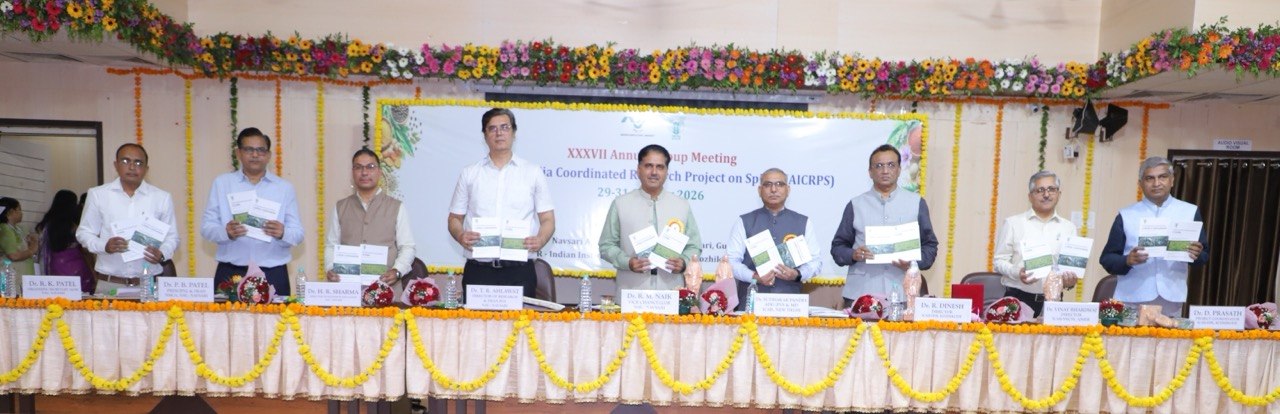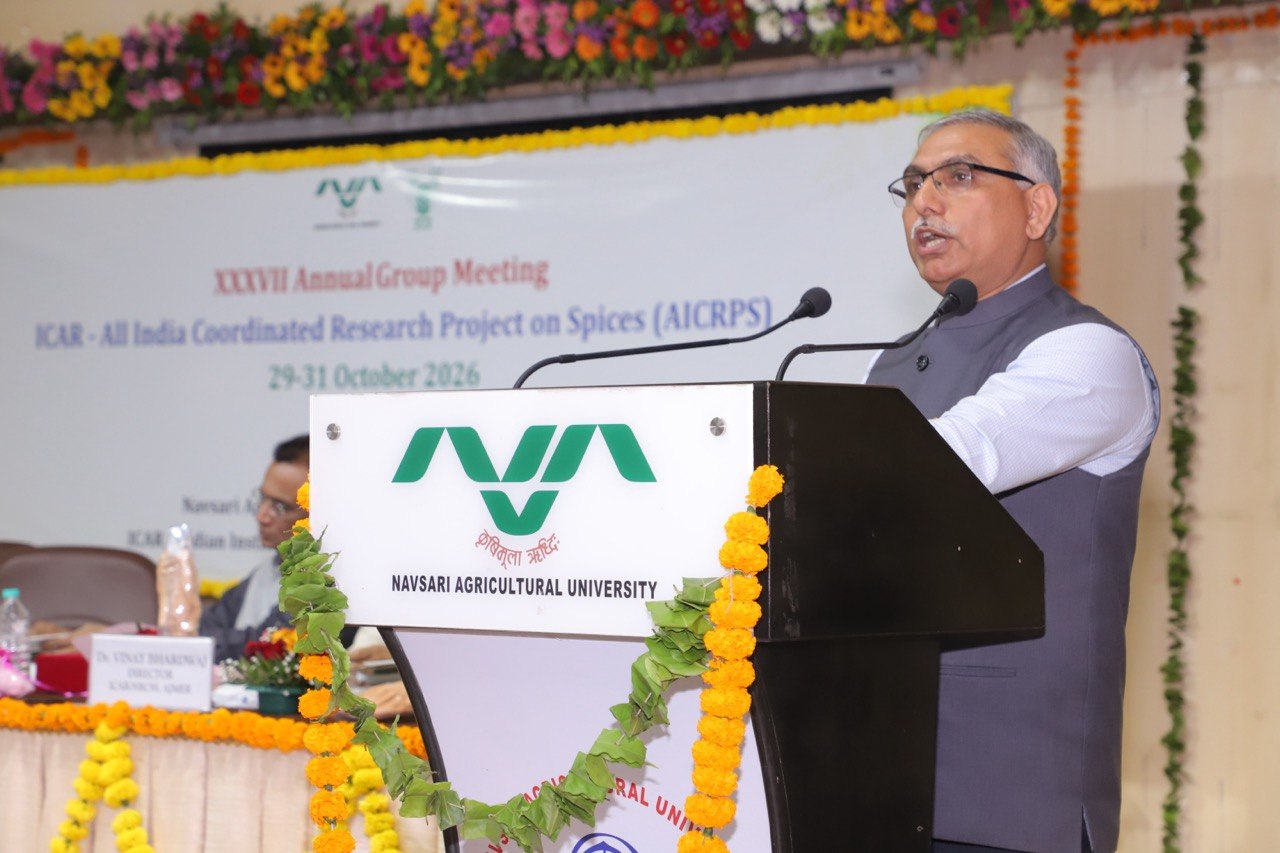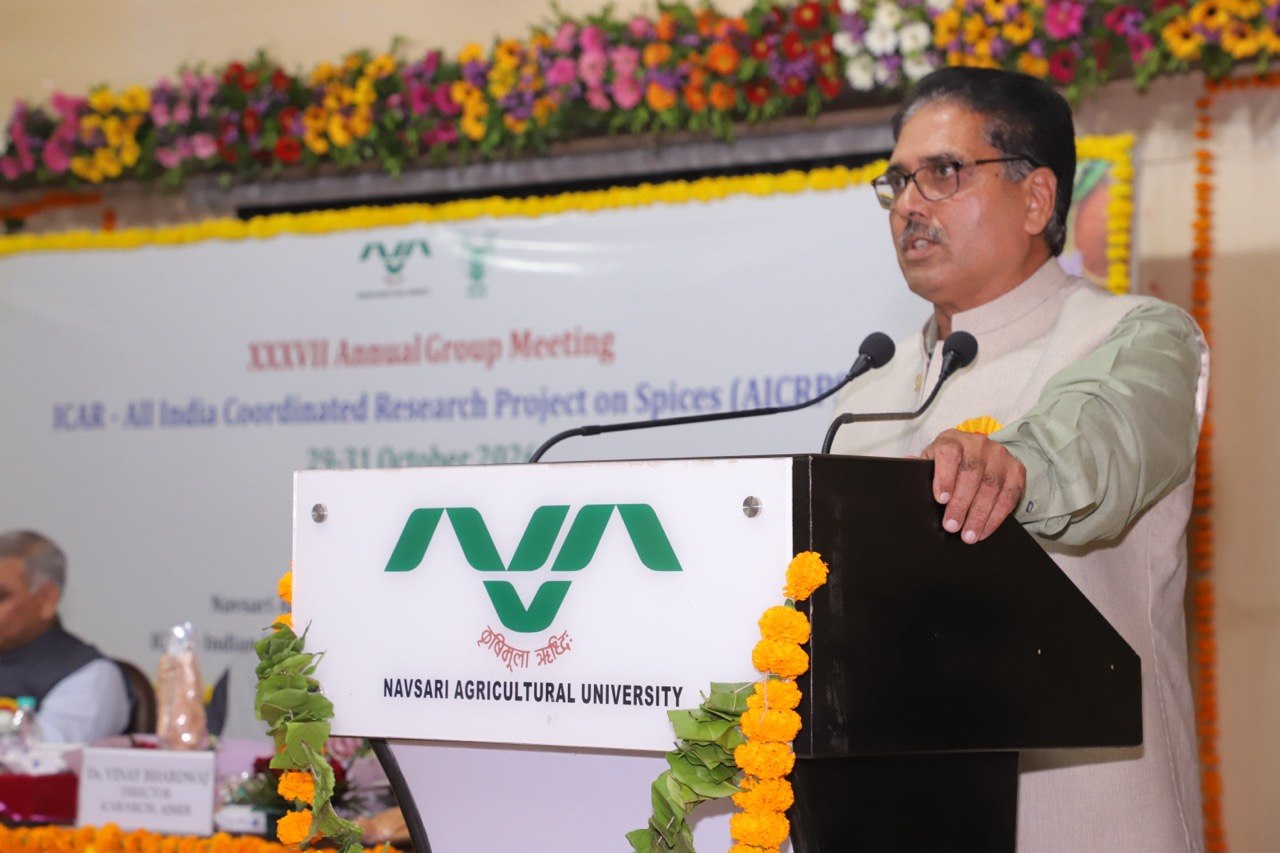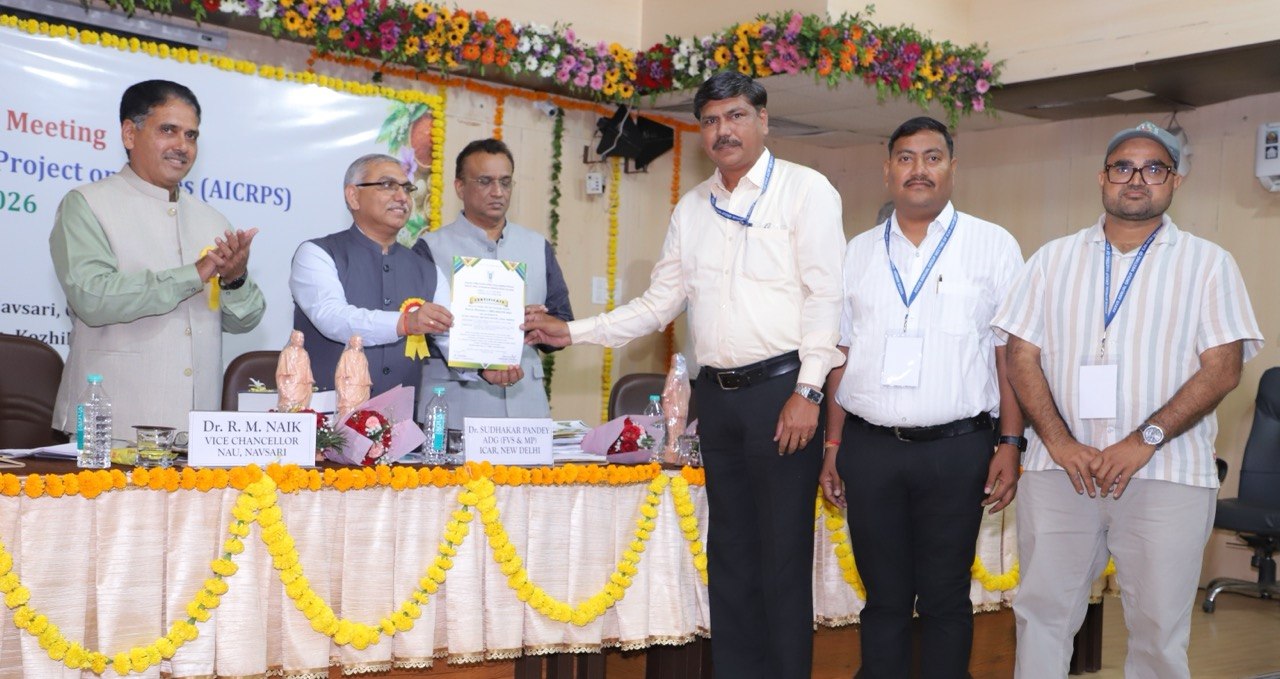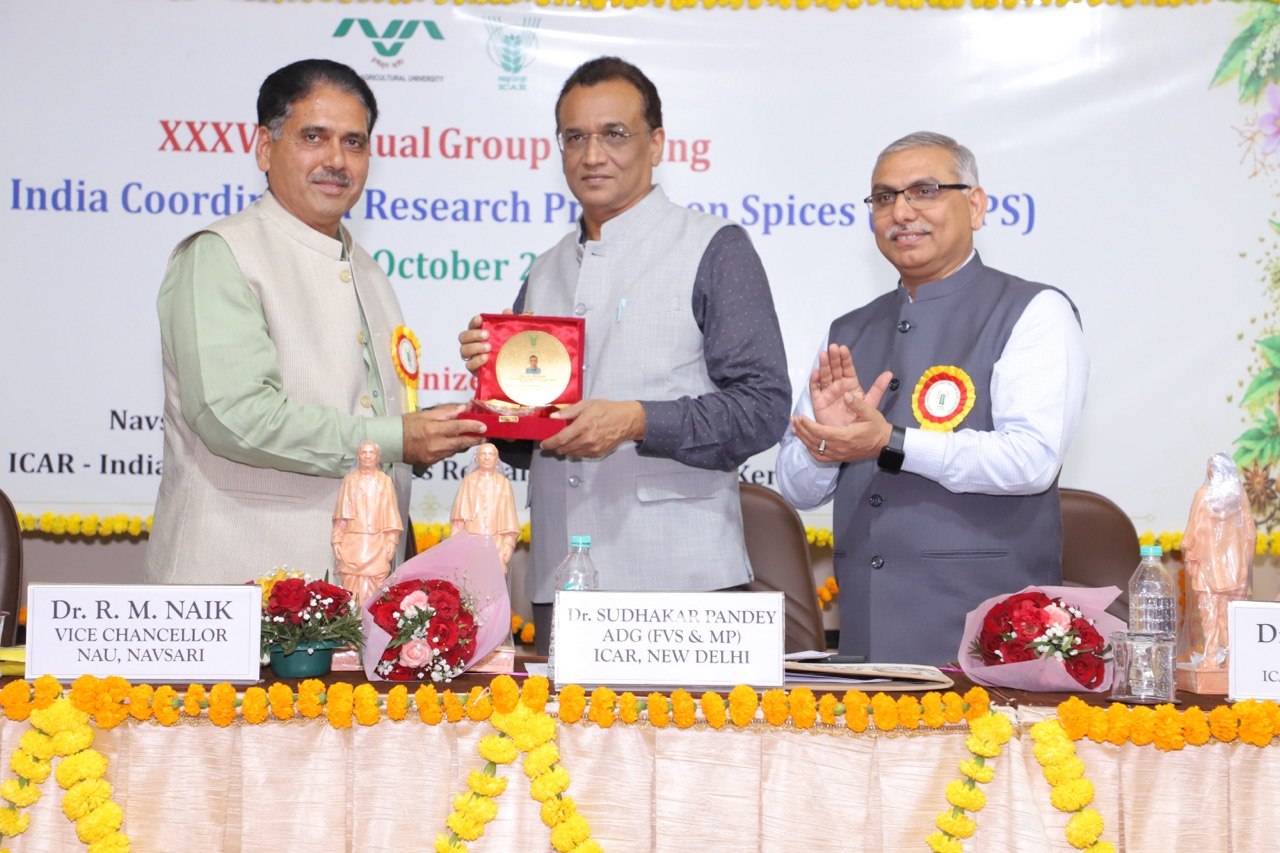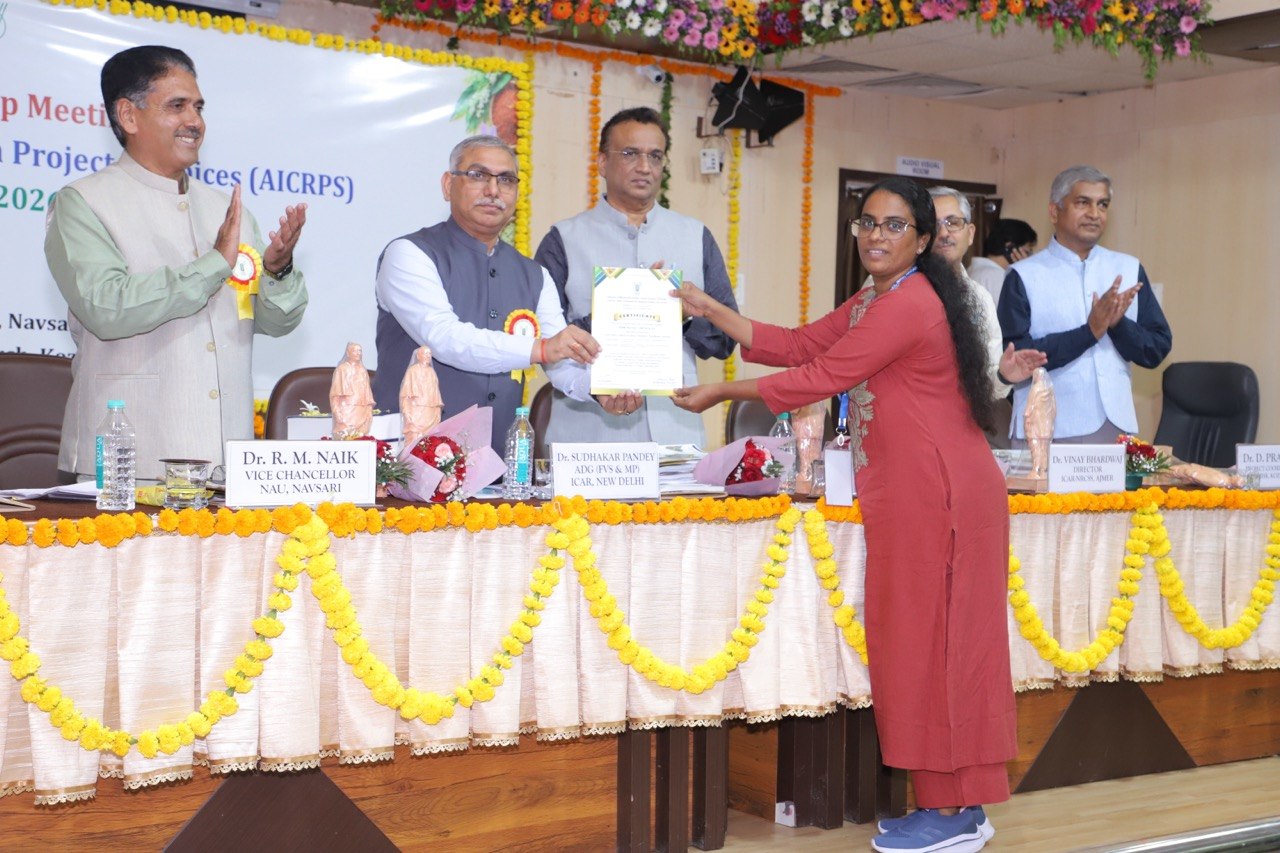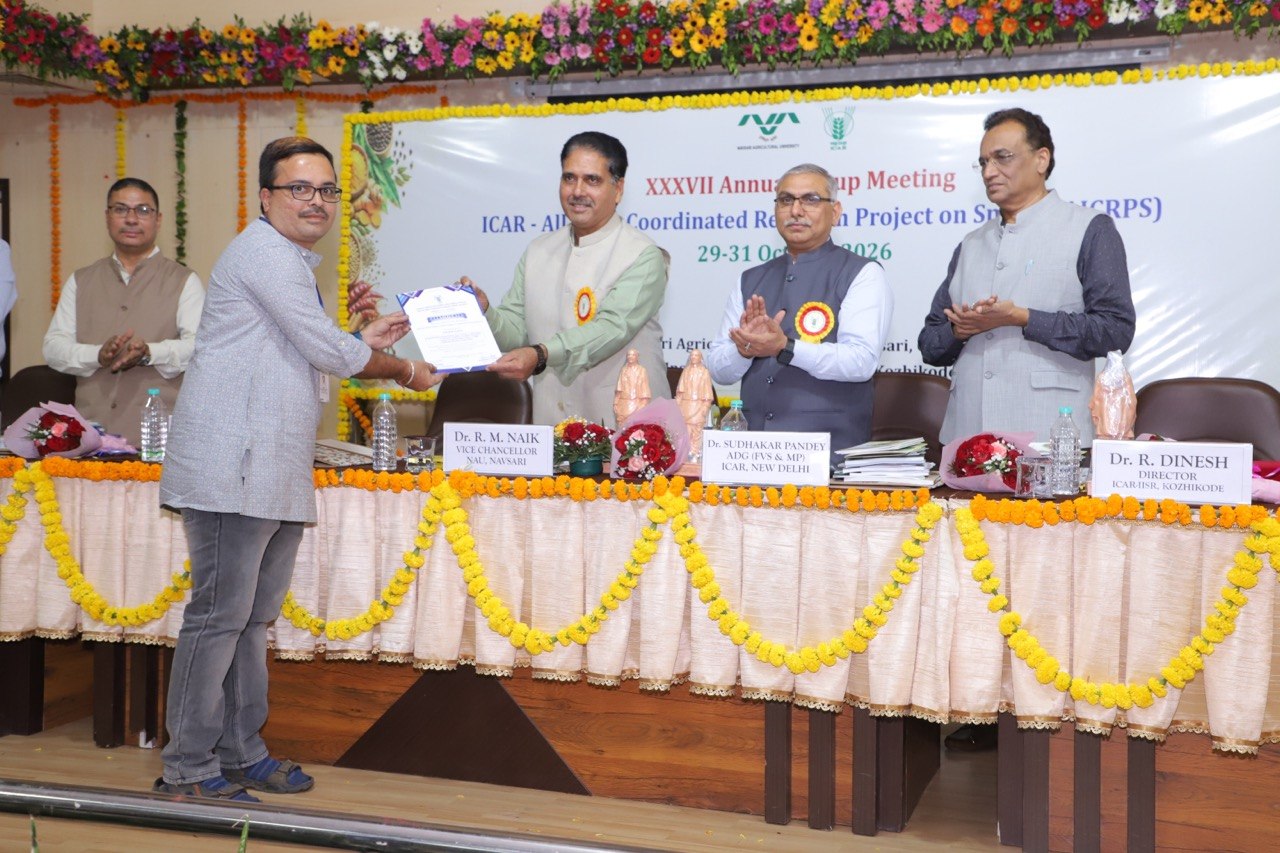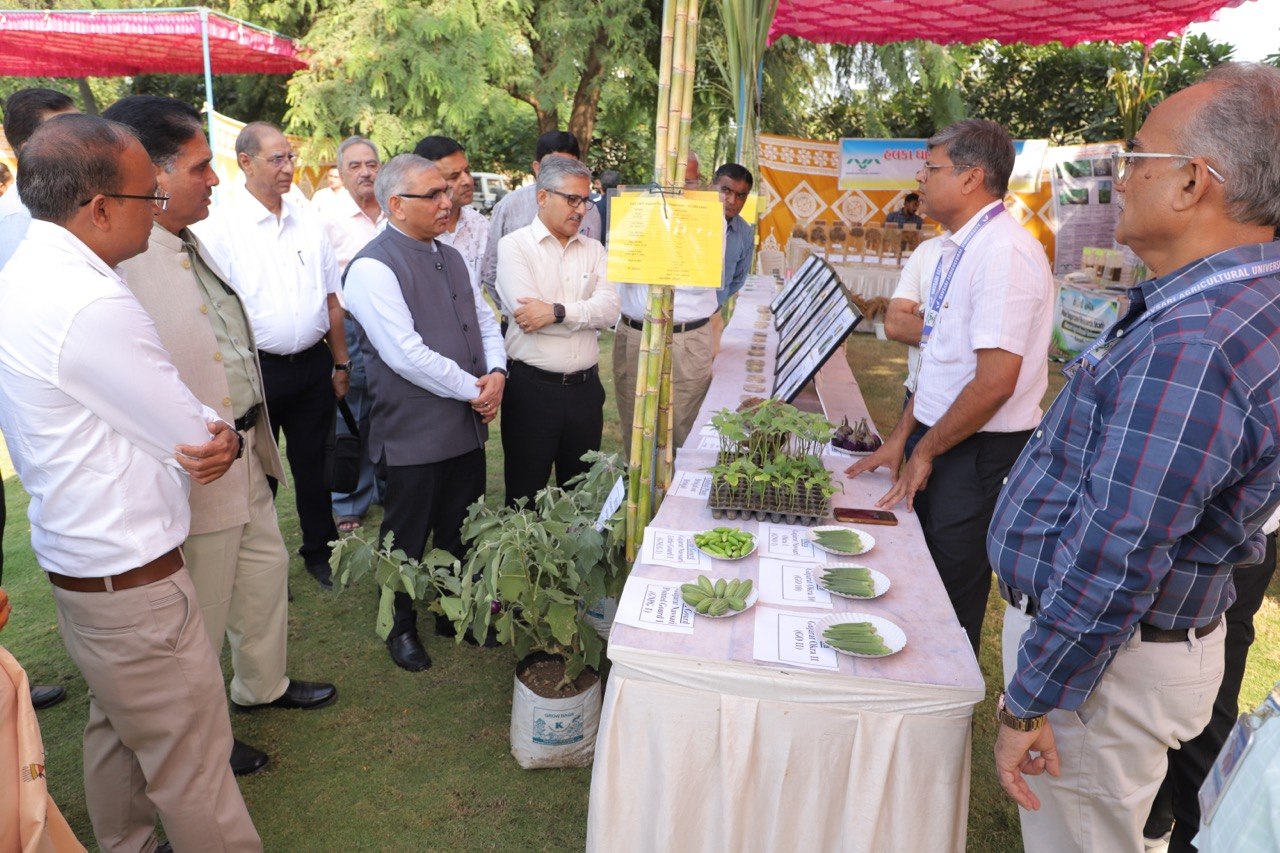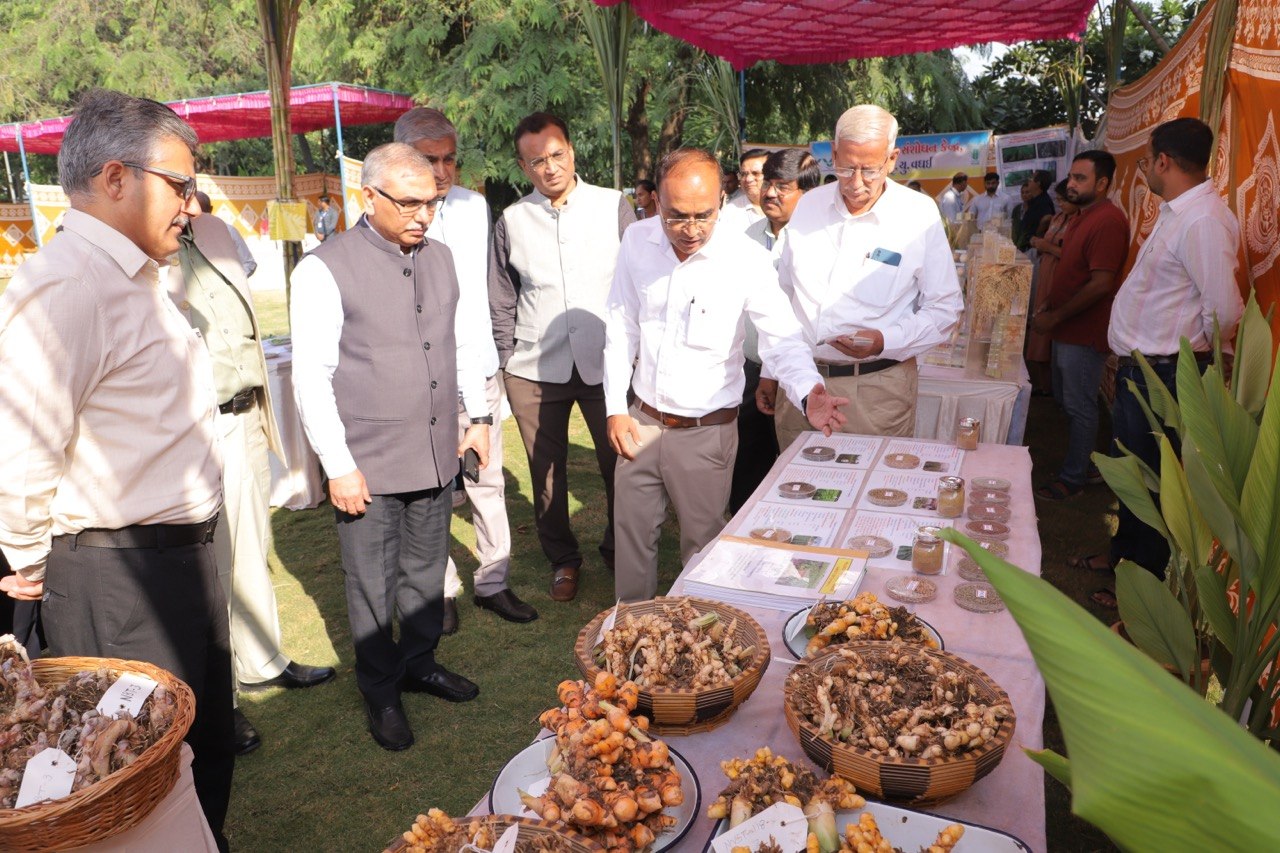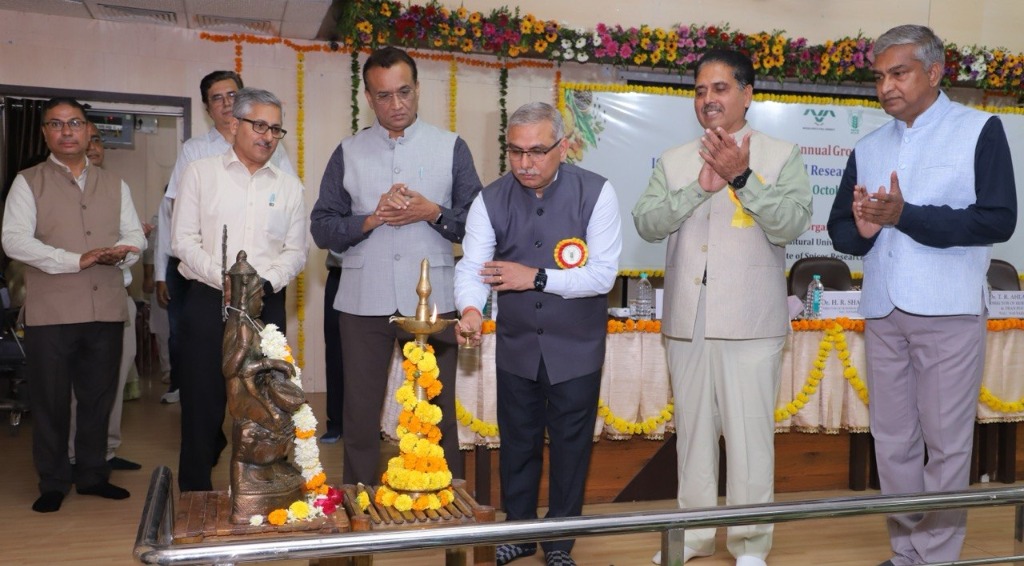
Inaugural ceremonial lamp lighting by Dr. R. M. Naik, Hon'ble Vice Chancellor, NAU, Dr. Sudhakar Pandey, ADG (ICAR), and dignitaries at Navsari Agricultural University
Event Overview
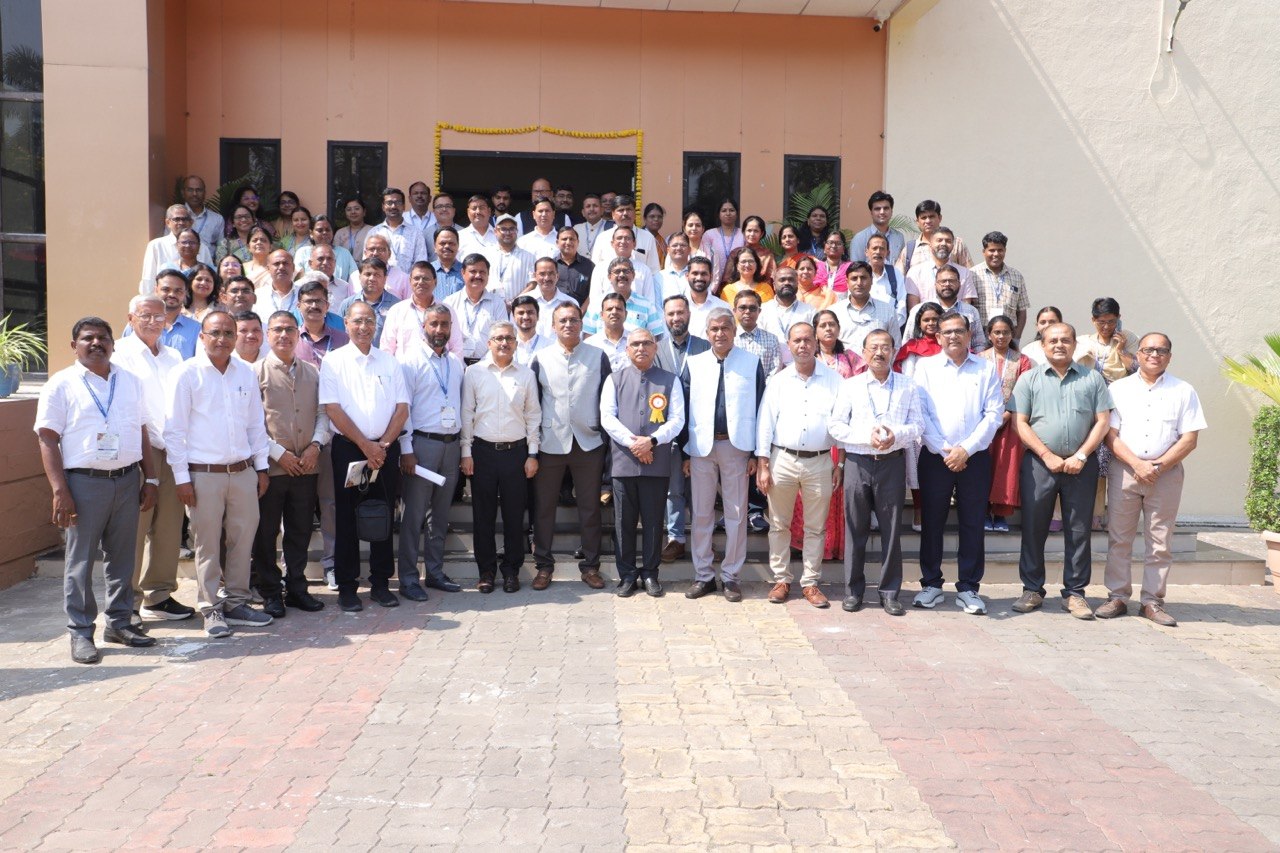
The 37th Annual Group Meeting of the Indian Council of Agricultural Research (ICAR) – All India Coordinated Research Project on Spices (AICRP on Spices) was conducted during 29–31 October, 2026, at Navsari Agricultural University (NAU), Navsari, Gujarat. The three-day national meet brought together leading spice researchers, scientists, and policy experts from across the country to comprehensively review the progress of research programmes on spice crops being carried out across India.
Inaugural Session: Emphasis on Quality, Food Safety and Farmer-Centric Research
The inaugural ceremony was held on 29th October, 2026. Dr. T. R. Ahlawat, Director of Research, NAU, extended a cordial welcome to the august gathering. Dr. D. Prasath, Project Coordinator, ICAR-AICRP on Spices, presented the achievements and progress of the research programmes under the project and highlighted the far-reaching impact of the ICAR-AICRP on Spices network at the national level.
Delivering the presidential address, Dr. R. M. Naik, Hon'ble Vice Chancellor, NAU, underscored that consistency in quality and food safety is paramount for the sustained growth of the spice sector. He urged that the spices research system must strive to ensure the availability of the right variety and the right technology to the farming community, thereby directly contributing to enhanced output and higher farm income.
Dr. Sudhakar Pandey, Assistant Director General (Horticultural Sciences), ICAR, the Chief Guest of the occasion, stated that the spices sector shall remain a key pillar in strategic plans for the accelerated growth of the horticultural sector in the coming decades. He stressed the vital importance of demand-driven varietal development, digitalization of data collection, and the development of climate-smart production technologies.
Dr. R. Dinesh, Director, ICAR-Indian Institute of Spices Research (IISR), Kozhikode, called upon the national spice research network to actively explore opportunities for integrating new-generation tools and advanced technologies for enhancing the efficiency of research initiatives.
Other eminent dignitaries gracing the occasion included:
- Dr. Vinay Bhardwaj, Director, ICAR-National Research Centre on Seed Spices (NRCSS), Ajmer
- Dr. H. R. Sharma, Director of Extension Education, NAU
- Dr. P. B. Patel, Principal and Dean, NAU
Awards, Felicitations and Publications
During the ceremony, outstanding scientific achievements and grassroots farmer innovations were recognized:
AICRP Best Centre Award for the Year 2025
Conferred upon the ICAR Research Complex for NEH Region, Barapani, in recognition of its outstanding contributions by developing sustainable spices production technologies for the North Eastern Hill region of India.
Progressive Farmer Felicitation
Shri Jayeshbhai Jayantibhai Patel, a progressive farmer from Palsana, Surat, was honoured for his steadfast commitment to scientific cultivation and value addition of mango ginger and turmeric.
A total of 15 publications — comprising 11 extension publications and 4 technical publications, including the Good Agricultural Practices (GAP) for cumin and large cardamom — covering cultivation, research management, and development of the spices sector were officially released during the inaugural session.
Plenary Session: New Varieties and Technologies for the Spice Sector
The technical and plenary sessions meticulously reviewed research findings across disciplines and approved two new high-yielding varieties and seven innovative farmer-friendly technologies:
Two New Spice Crop Varieties Recommended for Release
- Arka Coorg Excel (Black Pepper): High-yielding variety featuring early maturity, long spike length, and high dry recovery. Recommended for cultivation in Karnataka and Assam.
- IISR Kannike (Cardamom): Malabar-type cardamom hybrid demonstrating a highly resistant reaction to leaf blight disease. Recommended for cultivation in Kerala and Karnataka.
Seven Validated Technologies Approved for Farmers
- AMF Application: Standardisation of the AMF application dose and formulation in coriander and fenugreek.
- Root Rot IPM Module: Integrated Pest Management (IPM) module for the management of root rot in nigella (recommended for Chhattisgarh, Uttar Pradesh, and Bihar).
- PGPR Microbes for Turmeric: Use of PGPR microbes for phosphorus and zinc solubilisation and enhanced nutrient utilization in turmeric, validated across 11 states.
- Pest Management in Ginger & Turmeric: Safer chemical-based pest management of shoot borer in ginger and turmeric (recommended for Karnataka, Kerala, Chhattisgarh, Andhra Pradesh, Uttar Pradesh, and Tamil Nadu).
- Foliar Micronutrient Delivery in Cardamom: Precision foliar nutrient delivery protocol recommended for Kerala and Karnataka.
- Targeted-Yield Nutrient Management in Cardamom: Soil-test-based targeted nutrient delivery module recommended for Kerala and Karnataka.
Conclusion
The 37th Annual Group Meeting concluded with a formal vote of thanks proposed by Dr. R. K. Patel, Organizing Secretary of the meeting. The national meeting provided an expansive platform for reviewing multi-location trials, sharing groundbreaking knowledge, and setting strategic priorities for climate resilience, food safety, and quality standards to ensure Indian spices maintain their leadership in the global marketplace.
Photo Gallery (11 Photographs)
Click any image to open the full-screen interactive viewer.