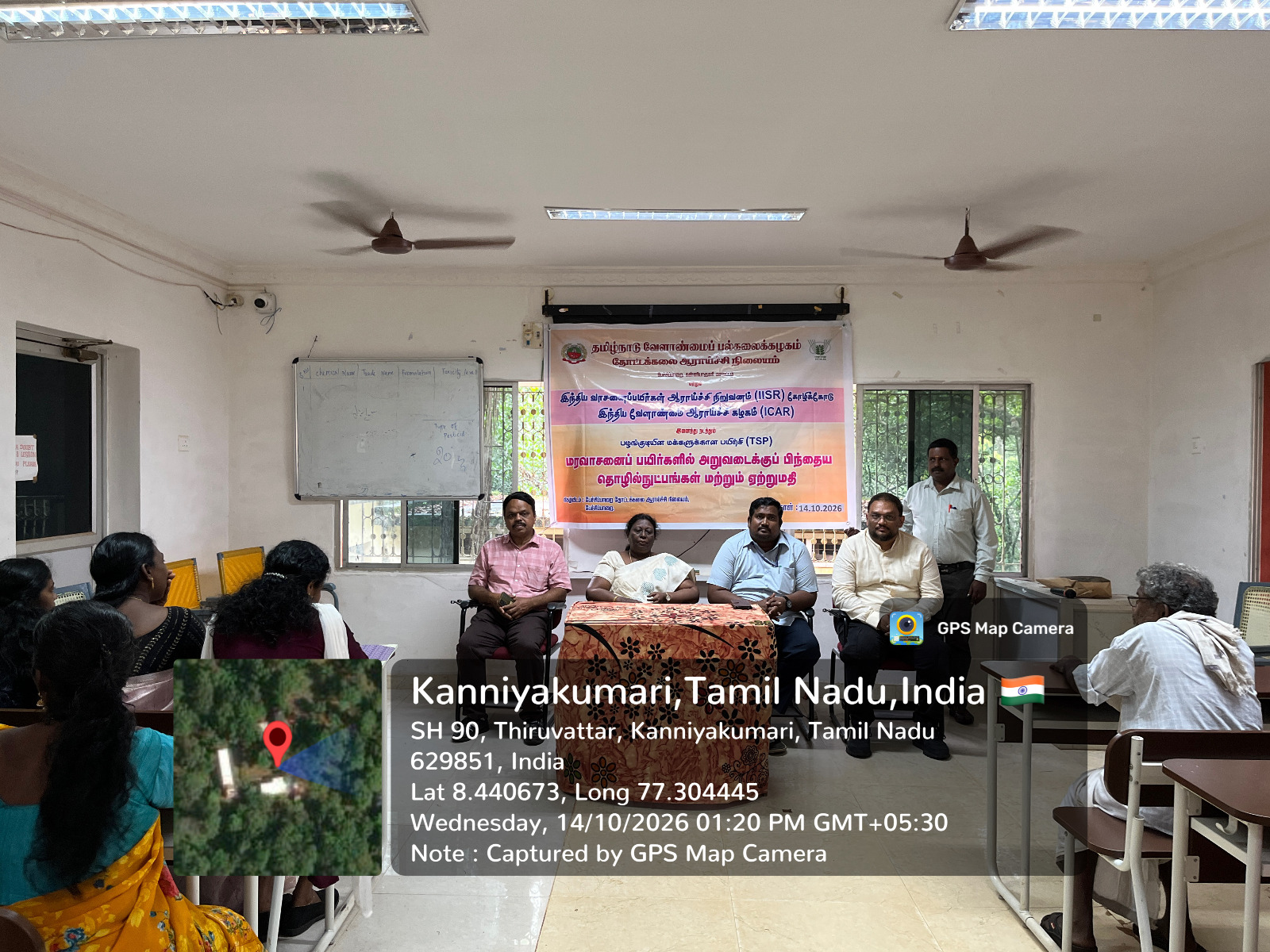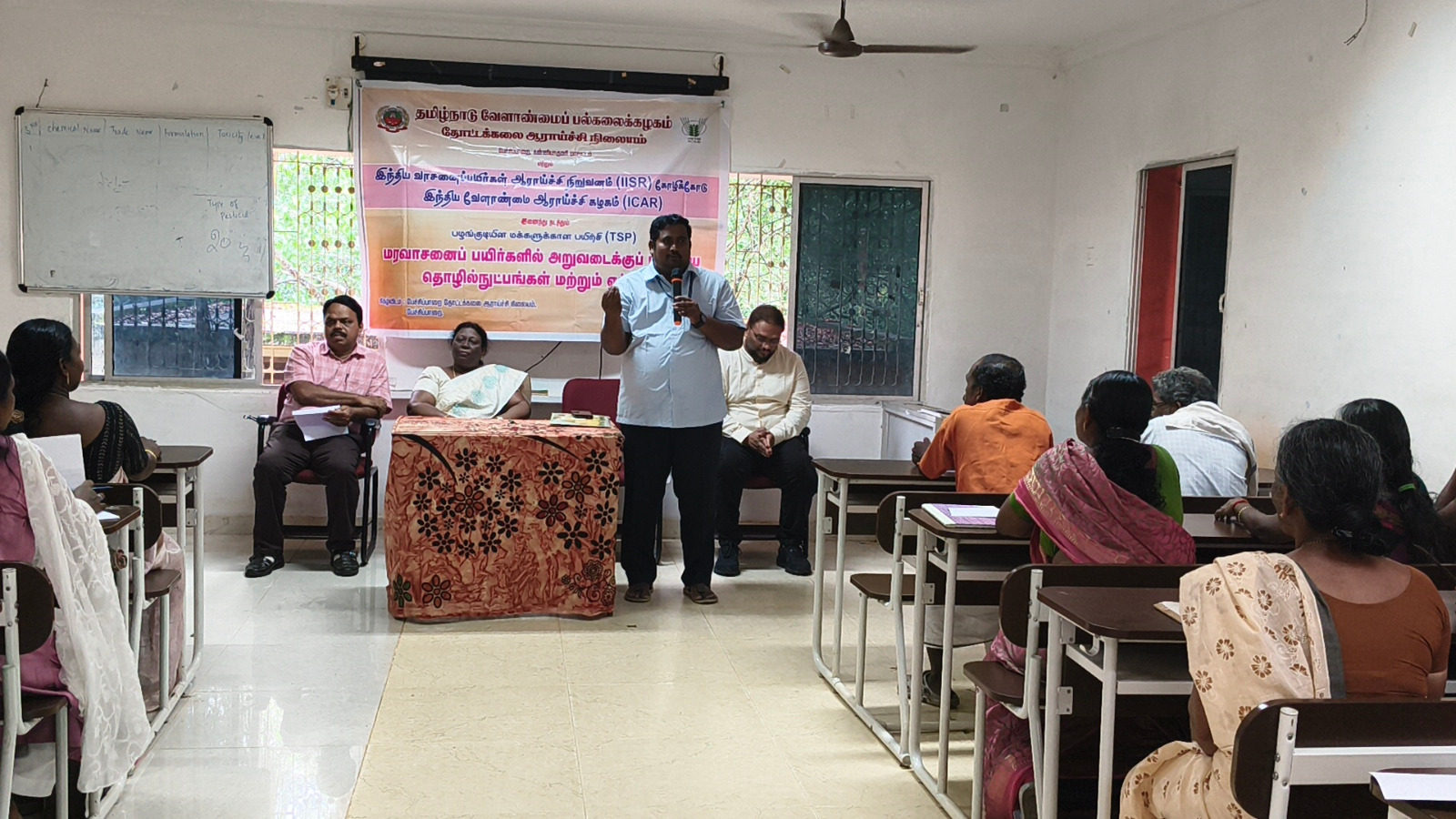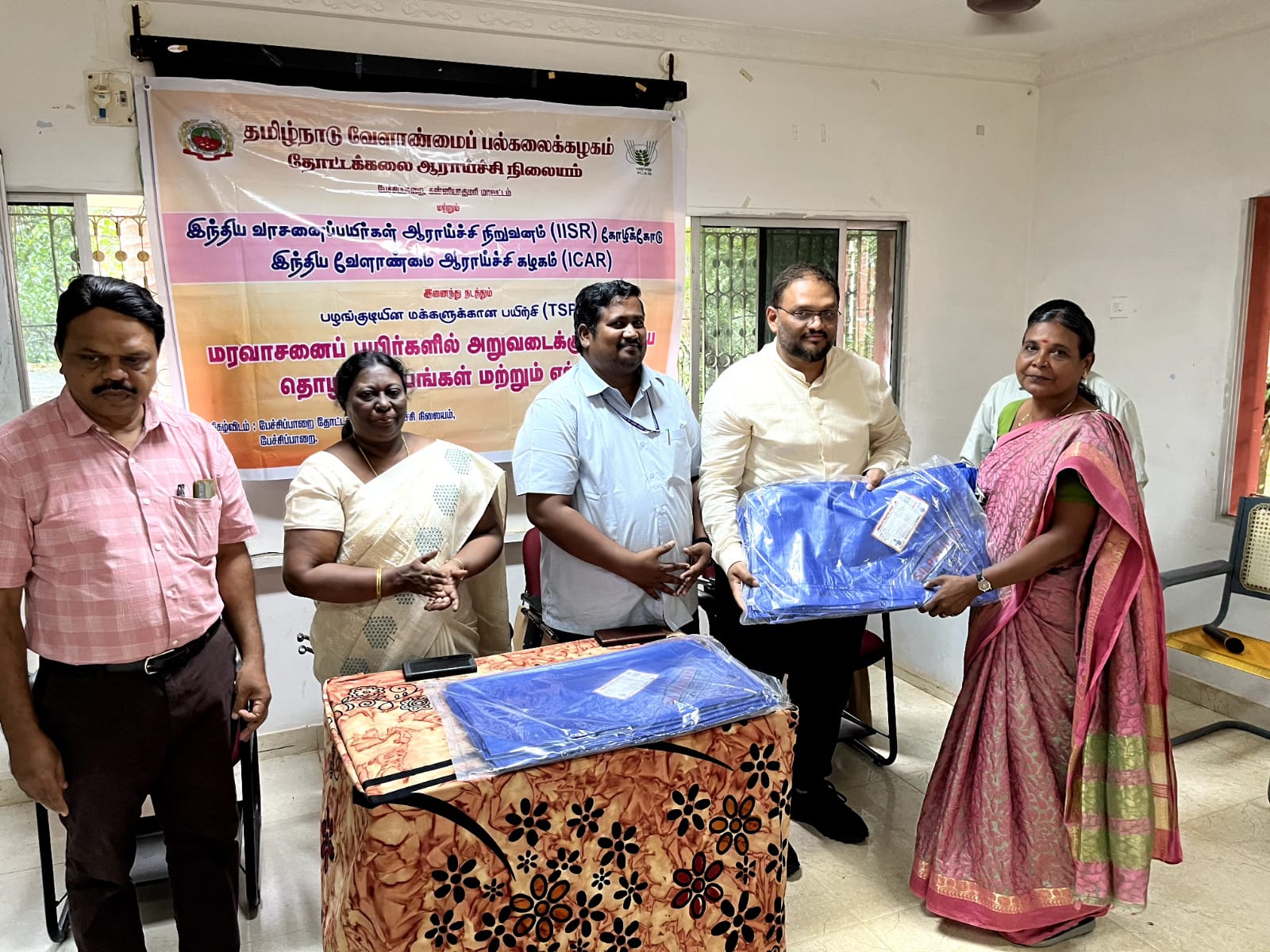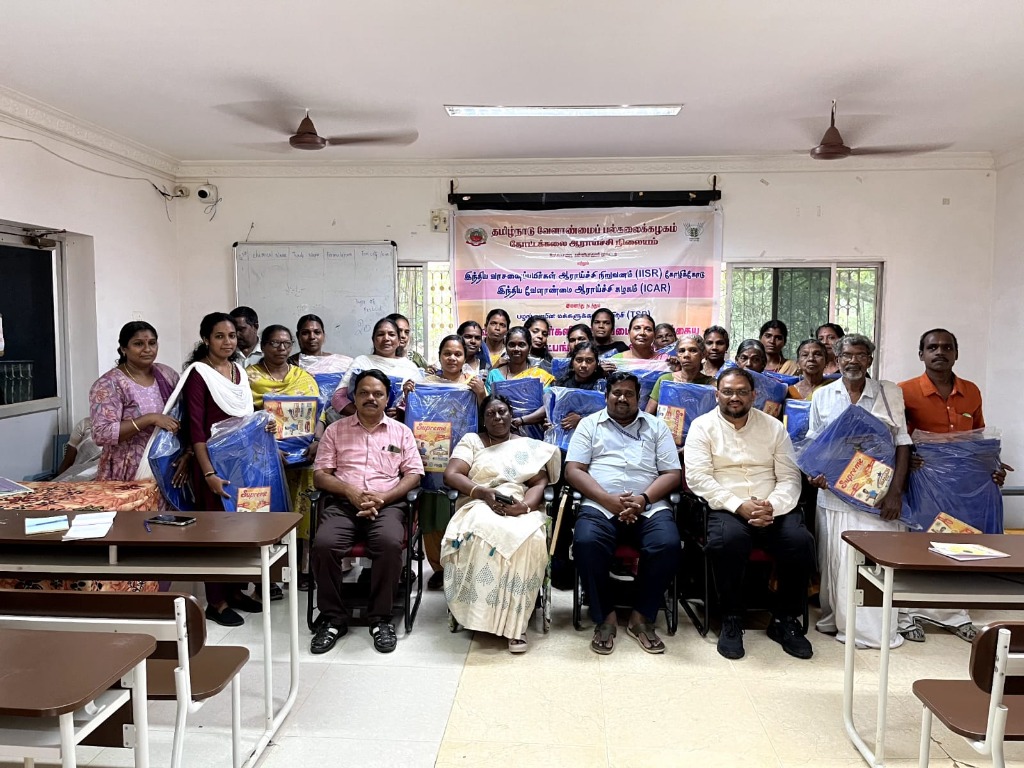
Tribal farmer beneficiaries with farm inputs (tarpaulin sheets) distributed during the TSP training programme at HRS, Pechiparai
Programme Overview
A one-day outreach training programme on "Post-Harvest Handling of Tree Spices" was organized under the ICAR – All India Coordinated Research Project on Spices (AICRPS) – Tribal Sub Plan (TSP) at the Horticultural Research Station (HRS), Pechiparai, Kanniyakumari District, Tamil Nadu. The programme aimed to impart scientific guidance and hands-on skills to tribal farmers on improved post-harvest processing, drying protocols, quality retention, value addition, and safe storage of commercial tree spices (including nutmeg, clove, cinnamon, and allspice).
Inaugural & Presidential Session
Dr. N. Richard Kennady, Professor and Scheme Scientist, welcomed the gathering, dignitaries, officials, and participating tribal farmers. In his welcome address, he elaborated on recent scientific techniques in the post-harvest handling of tree spices, emphasizing the vital role of correct harvest timing and primary processing in maintaining premium grade quality and commanding higher market prices.
Dr. A. Jaya Jasmine, Professor and Head, Horticultural Research Station, Pechiparai, presided over the programme and delivered the presidential address. She emphasized the strategic significance of tree spice cultivation in the Western Ghats agro-climatic tract of Kanniyakumari, urging tribal farmers to adopt scientific post-harvest technologies to minimize post-harvest losses and sustainably enhance their household farm incomes.
Technical Sessions
1. Value Addition in Tree Spices
Mr. Senthil Kumaran, Assistant Director, Spices Board, delivered an in-depth lecture focusing on the scope of primary processing, value addition, and secondary product diversification in tree spices such as nutmeg (mace and kernel), clove, and cinnamon. He highlighted methods to produce market-ready spice products that fetch premium returns.
2. Export Potential & Global Standards
Th. Sidhu conducted an interactive session on the export potential of Indian tree spices. He detailed international export quality parameters, phytosanitary requirements, cleanliness benchmarks, and grading specifications required for entering high-value domestic and overseas spice markets.
3. Management of Post-Harvest Storage Pests and Diseases
Dr. R. Sutha Raja Kumar dealt extensively with the identification and management of common storage pests, fungal contaminants, and moisture-induced spoilage during warehousing. Practical preventive measures, hygienic handling, and safe storage techniques were demonstrated to protect harvested spices against deterioration.
Interactive Session & Field Visit
An interactive Q&A session was conducted wherein the queries raised by participating tribal farmers regarding harvesting stages, sun-drying techniques, moisture testing, and pest problems were clarified in detail by the technical experts.
Following the classroom lectures, an educational field visit to the spice instructional farm at HRS Pechiparai was organized. Farmers received on-field demonstrations of tree spice cultivation, canopy management, mature fruit identification, and scientific harvesting practices.
Agricultural Input Distribution
To enable clean and hygienic sun-drying of harvested spice crops and prevent direct soil contact or contamination, heavy-duty tarpaulin sheets were distributed free of cost to all participating tribal farmers as essential farm inputs under the Tribal Sub Plan (TSP) scheme.
Tribal farmers hailing from seven tribal settlements and villages across the district participated and benefited from the programme:
Photo Gallery (4 Photographs)
Click any image to view in full-screen lightbox.