Event Overview
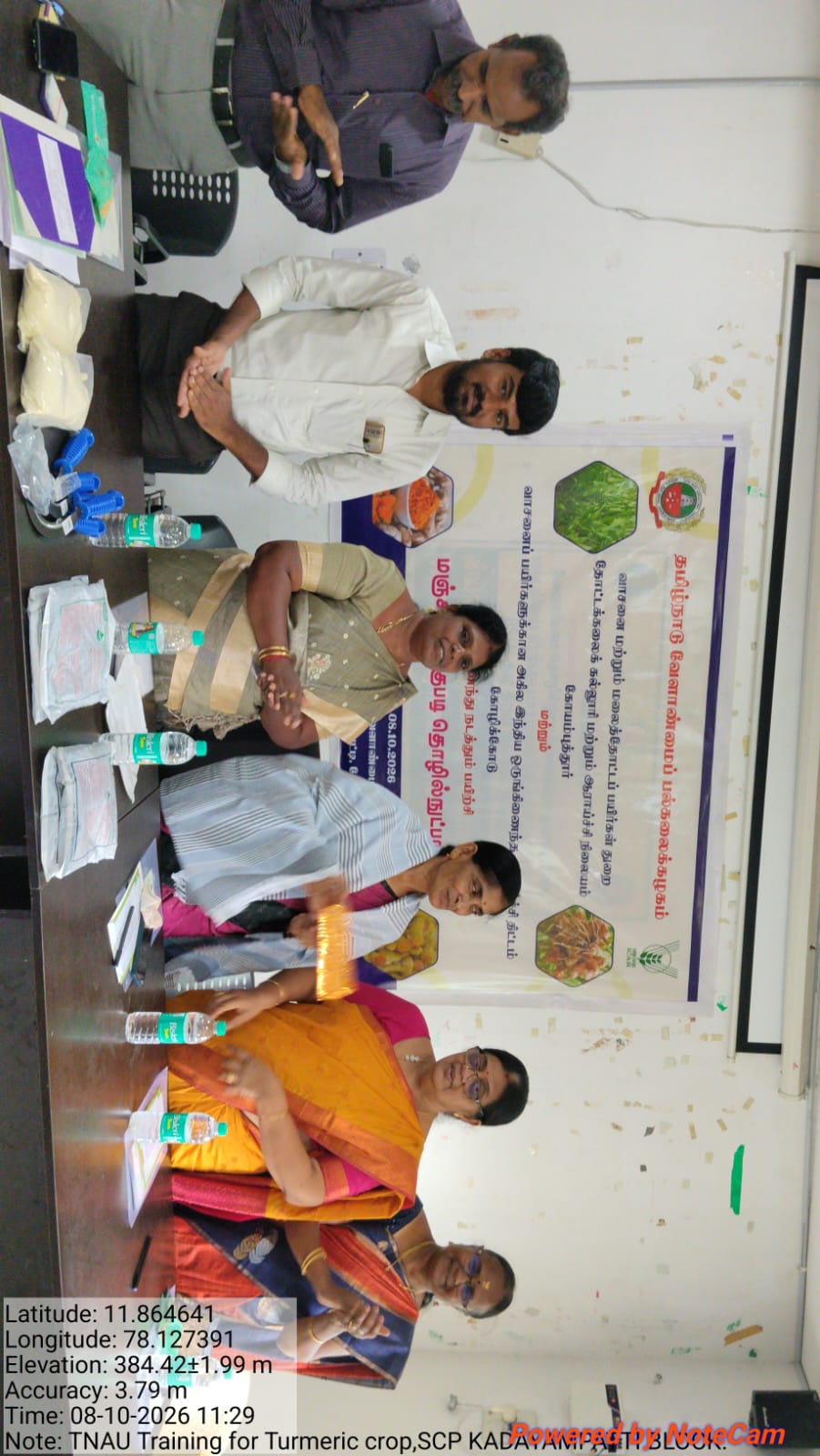
Tamil Nadu Agricultural University (TNAU), in collaboration with the All India Coordinated Research Project (AICRP) on Spices, organized a Scheduled Caste Sub Plan (SCSP) training programme on “Cultivation Technology of Turmeric” at Kadayampatti, Salem district, on 8 October 2026. The programme was organized by the Department of Spices and Plantation Crops, Horticultural College and Research Institute (HC&RI), Coimbatore, with the objective of creating awareness among Scheduled Caste farmers about improved turmeric production technologies, scientific crop management, pest and disease management, post-harvest processing, marketing strategies and value addition.
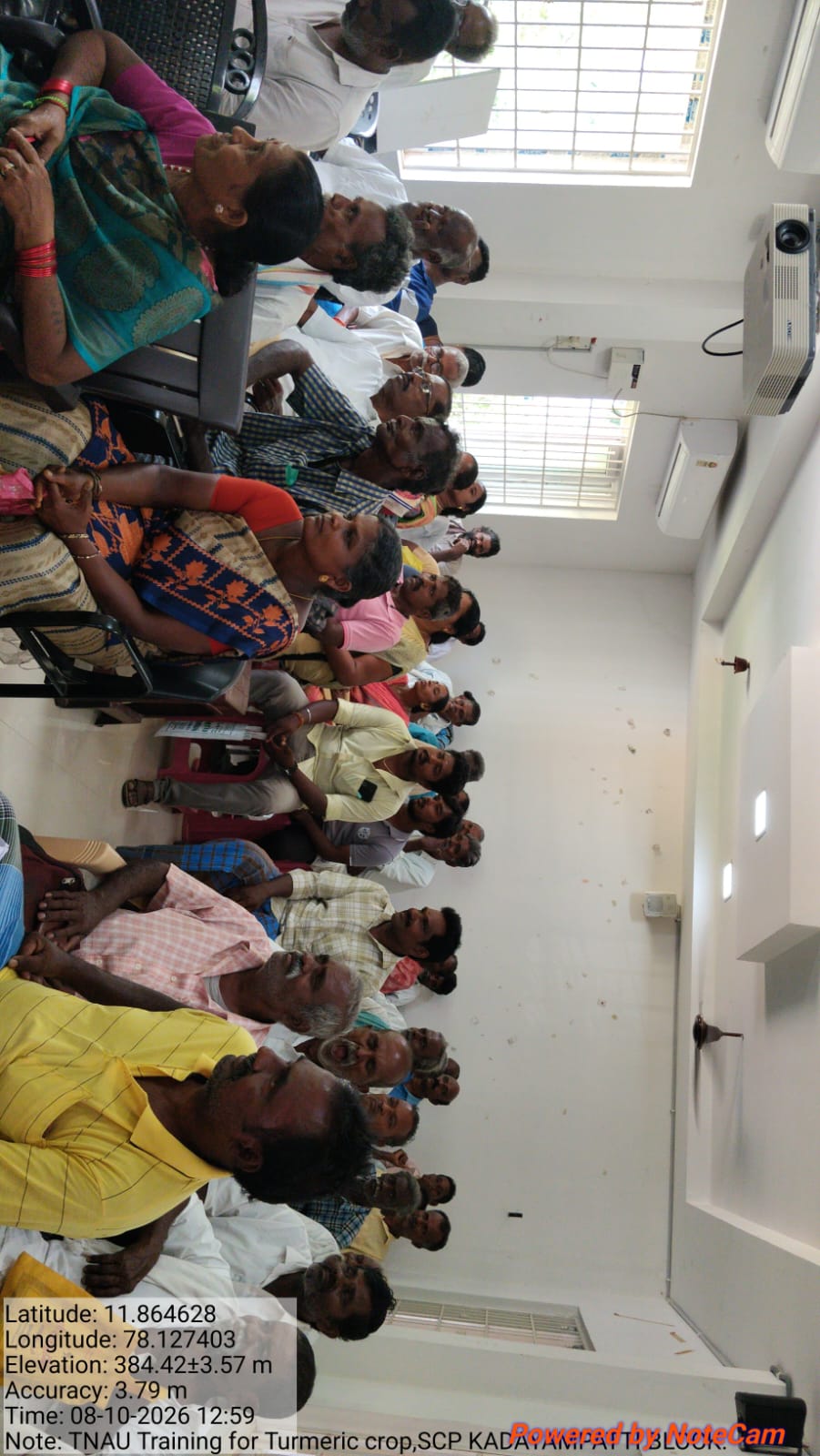
Nearly 50 Scheduled Caste farmers actively participated in the programme and benefited from the technical guidance provided by experts from TNAU and the Department of Horticulture and Plantation Crops.
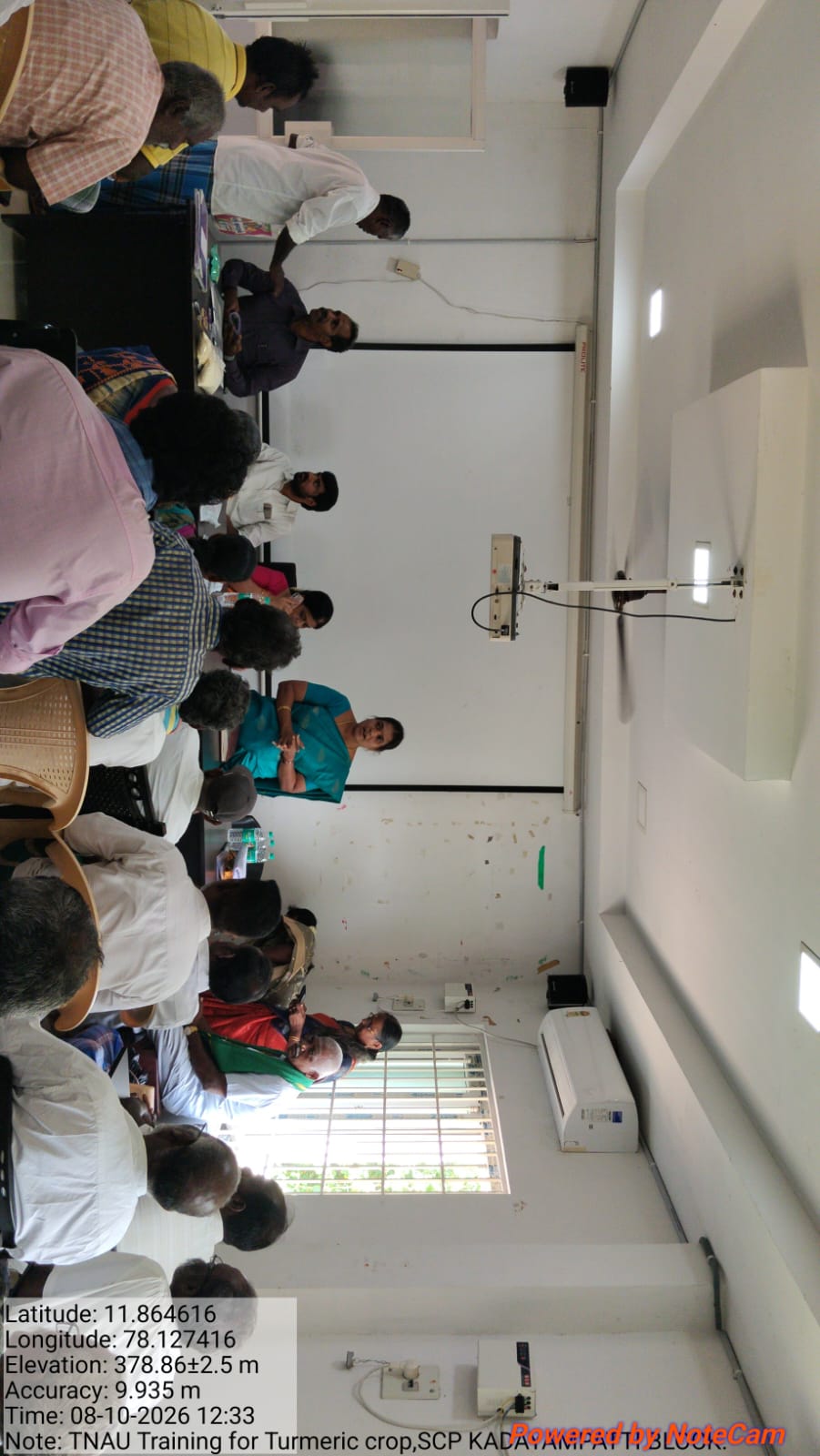
Technical Sessions
The technical sessions focused on the core pillars of scientific turmeric cultivation, crop protection, post-harvest processing, quality maintenance, marketing and entrepreneurship:
Scientific Turmeric Cultivation & Crop Management
Experts elaborated on the selection of high-yielding, high-curcumin varieties, seed rhizome treatment, field preparation, raised bed planting, drip fertigation schedules, and integrated nutrient management to optimize rhizome growth and quality.
Pest & Disease Management
Detailed guidance was provided on the early diagnosis and integrated management of key turmeric diseases such as rhizome rot and leaf spot, alongside shoot borer and thrips management, emphasizing biological controls, biocontrol agents, and eco-friendly plant protection measures.
Post-Harvest Processing & Value Addition
The session highlighted scientific curing, steam boiling, uniform solar drying, polishing methods, and primary processing techniques that prevent curcumin degradation, lower post-harvest losses, and deliver high-grade cured turmeric pods.
Marketing Strategies & Entrepreneurship
Resource persons briefed farmers on market intelligence, collective marketing through Farmer Producer Organisations (FPOs), quality compliance for regional markets, and entrepreneurial opportunities in value-added turmeric products.
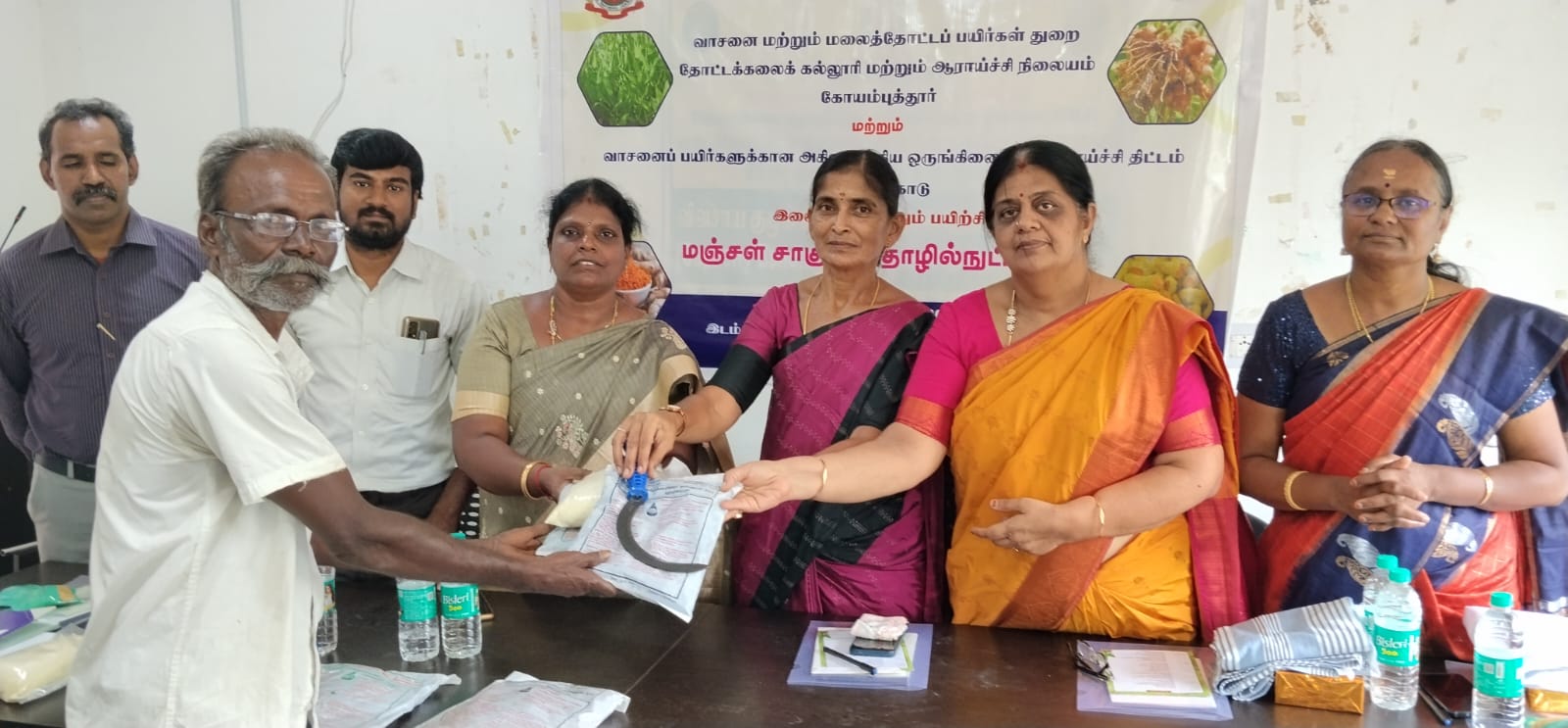
Agricultural Input Distribution
As part of the SCSP programme, essential agricultural inputs and implements were distributed to the participating beneficiaries to facilitate the adoption of improved and sustainable turmeric production practices:
- Harvesting Sickles: Distributed to support farmers in carrying out essential crop operations and clean harvesting with reduced labour fatigue and crop damage.
- Biofertilizers: Provided to promote sustainable soil biological health, enhance nutrient assimilation, and encourage eco-friendly crop nutrition.
- IISR Turmeric Micronutrients: Specialized micronutrient formulation developed by ICAR-IISR to correct multi-micronutrient deficiencies, improve crop vigour, and significantly enhance rhizome yield and curcumin content.
The input distribution was intended to support farmers directly in carrying out essential crop operations and encourage the adoption of appropriate agricultural inputs for improved crop management.
Farmer-Scientist Interactive Session
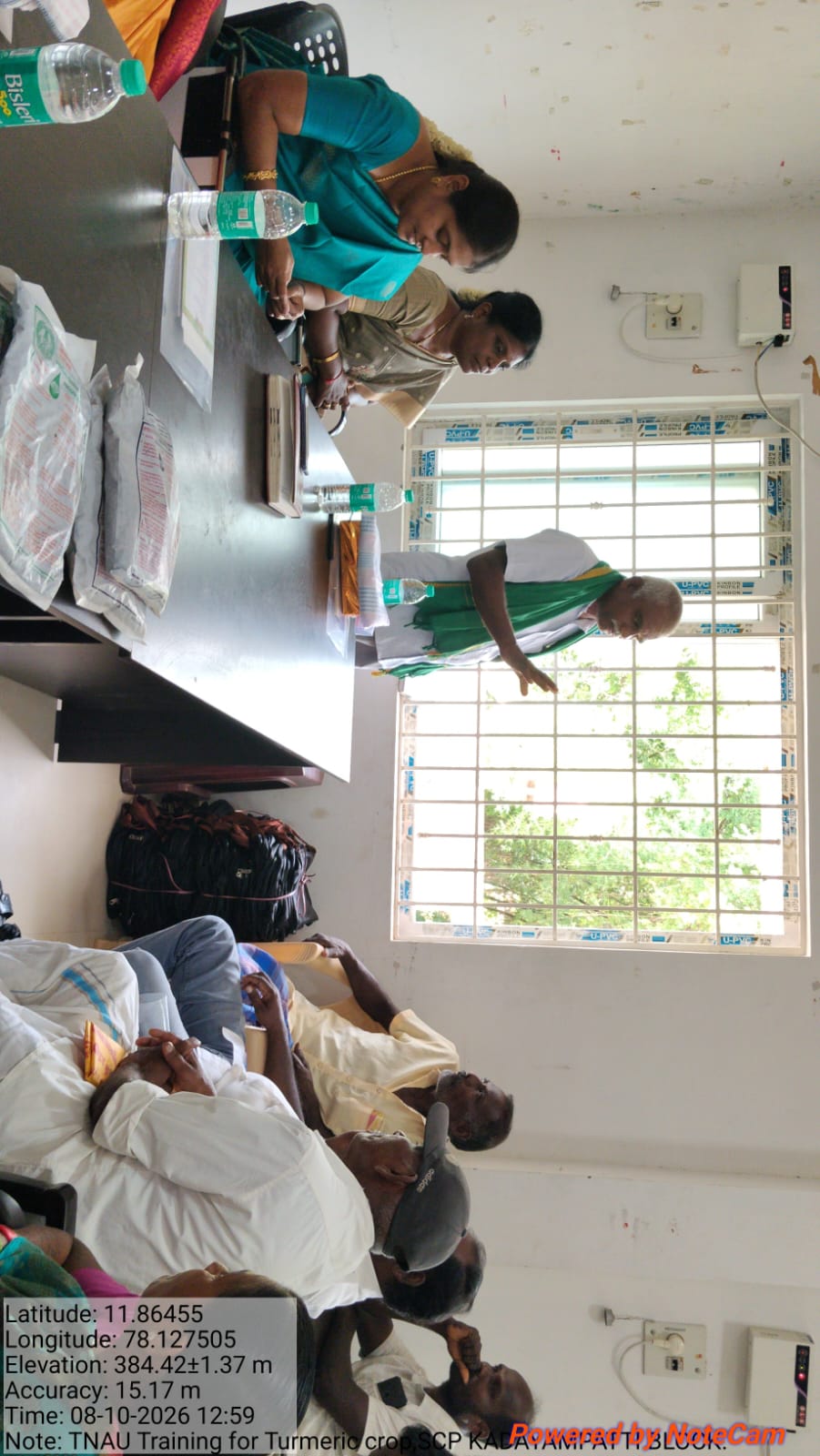
An interactive session was organized to facilitate direct interaction between the farmers and the resource persons. The participating farmers discussed their field-level cultivation problems and sought technical guidance on turmeric production, nutrient deficiency management, and disease control.
The experts addressed their queries thoroughly and provided customized recommendations to help farmers overcome cultivation-related constraints, reduce production costs, and improve crop productivity.
Programme Impact
The training programme empowered nearly 50 Scheduled Caste turmeric farmers with actionable, scientifically proven technologies. By combining multi-disciplinary classroom lectures with high-quality critical input distribution, the programme reinforced sustainable farm management, boosted farmer confidence, and paved the way for higher yields, superior product quality, and enhanced household income.