Programme Overview
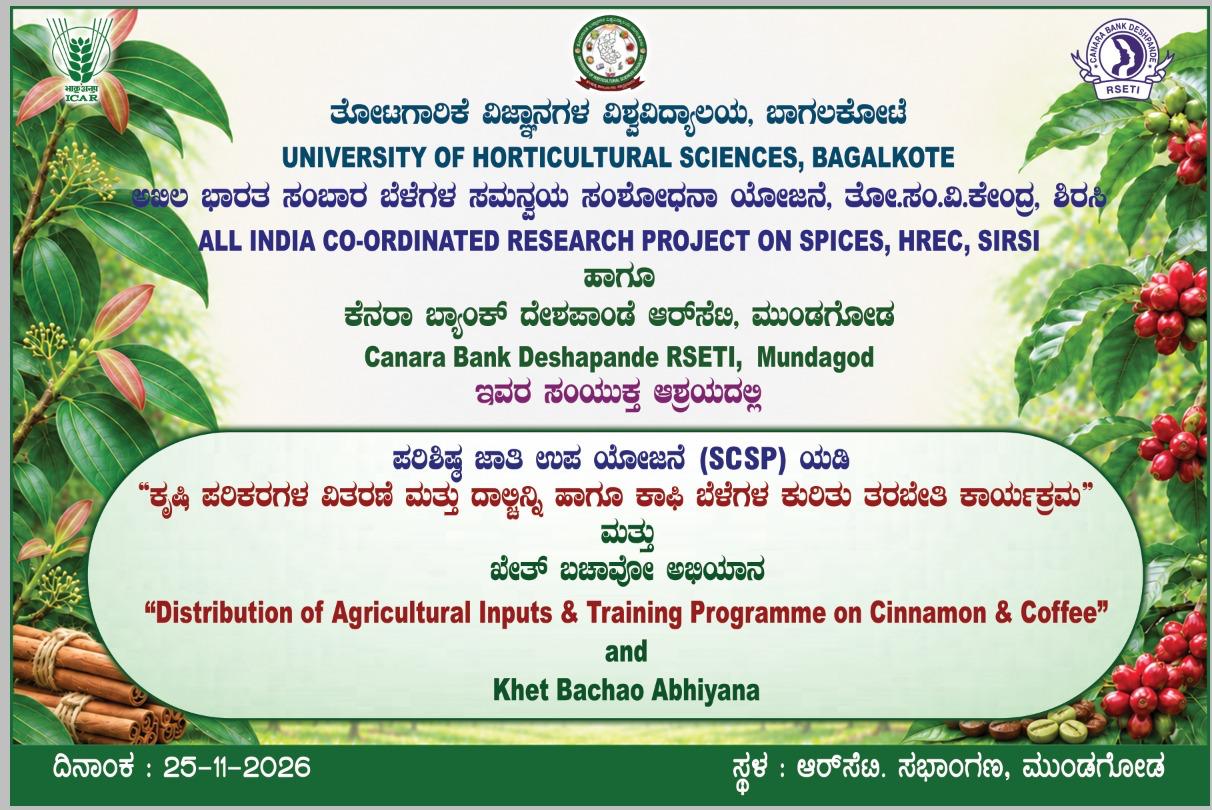
The University of Horticultural Sciences, Bagalkote, under the All India Coordinated Research Project on Spices (AICRP on Spices), Horticultural Research and Extension Centre (HREC), Sirsi, organised a programme under the Scheduled Caste Sub-Plan (SCSP) on “Distribution of Agricultural Inputs and Training Programme on Improved Cultivation Practices in Cinnamon and Coffee” on 25 November 2026 at Mundagod.
Inaugural & Presidential Addresses
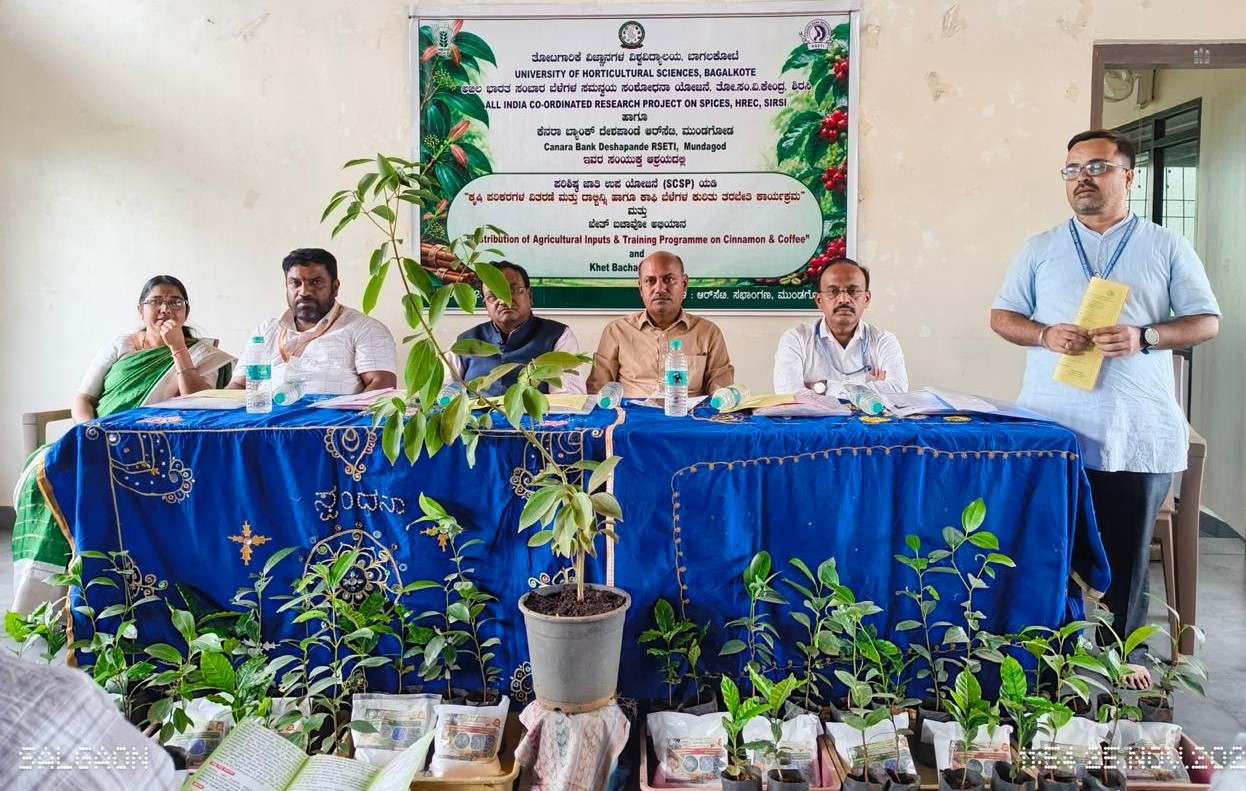
The programme commenced with the Raitha Geethe. Dr. Sudheesh Kulkarni, Scientist, AICRP on Spices, welcomed the gathering and highlighted the objectives and importance of the programme.
The programme was inaugurated by Dr. Shankarappa T. H., Dean, College of Horticulture, Sirsi. In his inaugural address, he emphasised the importance of proper utilisation and careful management of the agricultural inputs distributed to the beneficiaries, and highlighted that adoption of scientific cultivation practices would help improve crop productivity.
The programme was presided over by Dr. Manjunatha Reddy T. B., Scheme Head, AICRP on Spices, HREC, Sirsi. In his address, he encouraged farmers to adopt improved technologies developed by research institutions, continuously update their technical knowledge, and improve soil health through appropriate management practices.
The Chief Guest, Shri Krishna Kullur, Senior Assistant Director of Horticulture, Mundagod, appreciated the efforts of HREC, Sirsi, in identifying Mundagod taluk for implementation of the programme and urged farmers to make effective use of the facilities and support provided by the Government.
Technical Sessions & Khet Bachao Abhiyan
- Dr. R. T. Patil, Associate Professor and Head, HREC, Tarehalli, delivered a lecture on improved cultivation practices in cinnamon.
- Dr. Sudheesh Kulkarni highlighted the importance and cultivation potential of coffee.
- Dr. Manjunatha Reddy T. B. explained the major pest and disease management practices in cinnamon and coffee and highlighted the importance of the “Khet Bachao Abhiyan”.
- Dr. Shankarappa T. H. explained the role and importance of bio-agents in improving soil health.
Agricultural Inputs Distributed (20 Beneficiaries)
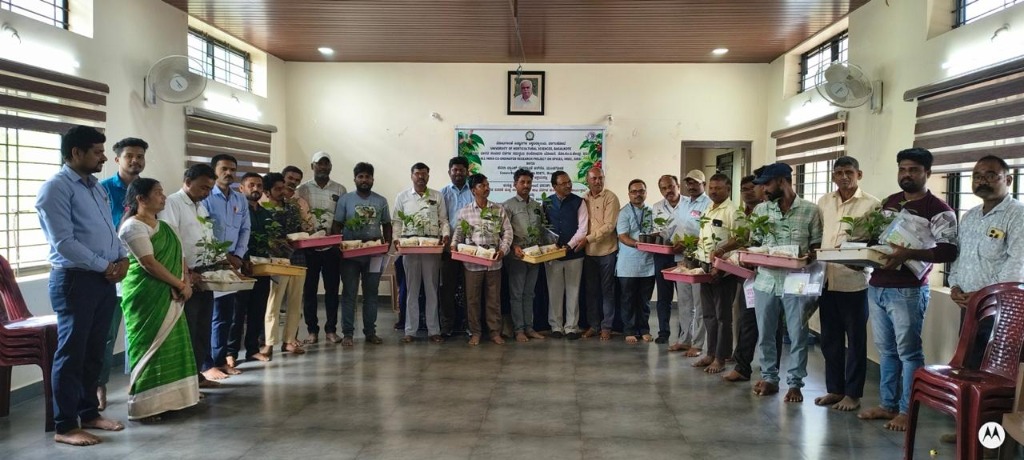
A total of 20 selected farmers participated in the training programme. Each beneficiary was provided with 100 cinnamon plants, 75 coffee plants, 5 kg of Trichoderma, and 5 kg of Pseudomonas to facilitate the adoption of recommended cultivation and crop-management practices.
| Sl. No. | Input Distributed | Quantity per Farmer | Total Quantity (20 Farmers) |
|---|---|---|---|
| 1 | Cinnamon plants | 100 plants | 2,000 plants |
| 2 | Coffee plants | 75 plants | 1,500 plants |
| 3 | Trichoderma | 5 kg | 100 kg |
| 4 | Pseudomonas | 5 kg | 100 kg |
| Total Inputs Distributed | 3,500 plants and 200 kg bio-inputs | ||
Impact & Outcome
The programme provided technical knowledge on improved cinnamon and coffee cultivation, soil-health management, and pest and disease management, along with critical planting materials and bio-inputs. The initiative is expected to encourage participating farmers to adopt scientific production practices, improve crop establishment, and strengthen the sustainability and productivity of their farming systems.
Photo Gallery (6 Photographs)
Click any image to view in full-screen interactive lightbox.
.jpeg)
.jpeg)
.jpeg)