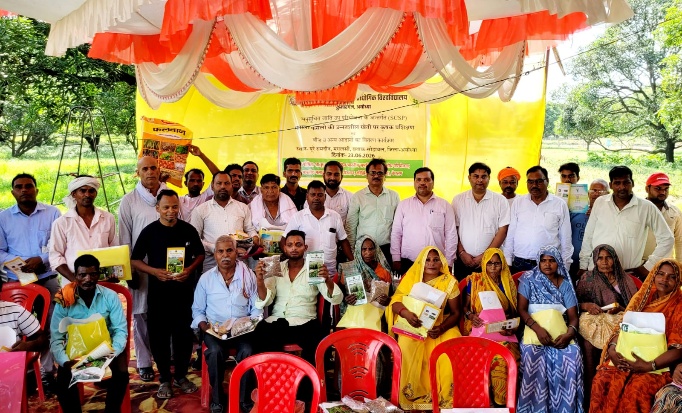
Event Overview
Two Farmer Training and Agricultural Input Distribution Programmes were organized on 23 June 2026 and 26 June 2026 under the Scheduled Caste Sub-Plan (SCSP) of the Government of India by the All India Coordinated Research Project on Spices (AICRP on Spices) and the Acharya Narendra Deva University of Agriculture and Technology (ANDUAT), Kumarganj, Ayodhya.
The programmes were held at two locations: Village Pure Ramdin, Magalsi, Block Sohawal, District Ayodhya (U.P.) and Village-Gaurabhari, PO-Karaiyabhari, Block-Pachpedwa, District-Balarampur (U.P.). The programme aimed to enhance the income and agricultural productivity of Scheduled Caste farmers by promoting the adoption of modern agricultural technologies. Financial support was provided by the All India Coordinated Research Project on Spices, Kozhikode, Kerala, under the SCSP.
Training Programme
More than 100 Scheduled Caste farmers participated in the event, where university scientists and experts delivered practical training on:
- Improved production technologies for spice and vegetable crops
- Scientific disease and pest management
- Climate-resilient cultivation practices
- Post-harvest management and agribusiness opportunities
The programme concluded with the free distribution of agricultural inputs, enabling farmers to adopt modern production technologies and improve crop productivity.
Village Pure Ramdin, Magalsi, Block Sohawal, District Ayodhya (U.P.)
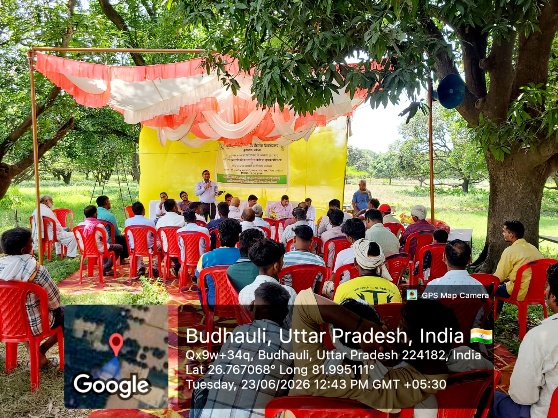
Pic: Training and input distribution at Village Pure Ramdin, Magalsi, Block Sohawal, District Ayodhya (U.P.)
Village-Gaurabhari, PO-Karaiyabhari, Block-Pachpedwa, District-Balarampur (U.P.)
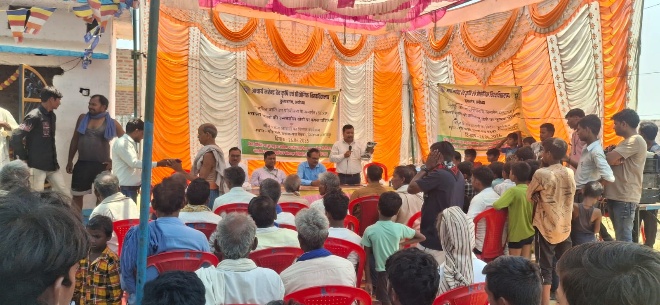
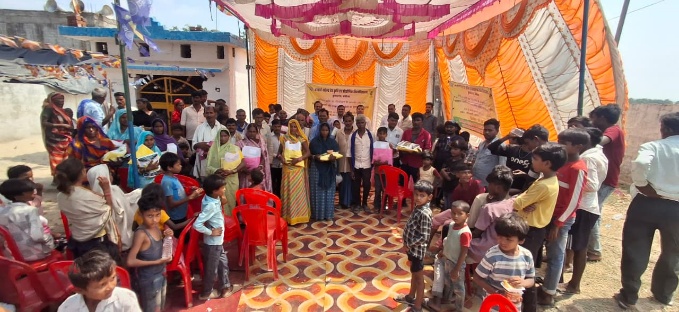
Pic: Training and input distribution at Village-Gaurabhari, PO-Karaiyabhari, Block-Pachpedwa, District-Balarampur (U.P.)
Programme Impact
The programme significantly enhanced farmers' awareness and understanding of modern, science-based agricultural practices for spice and vegetable cultivation. Through expert guidance and hands-on technical training, participants gained practical knowledge on improved crop production, integrated pest and disease management, nutrient management, climate-resilient farming, post-harvest handling and value addition.
The free distribution of quality seeds and essential agricultural inputs encouraged farmers to adopt recommended technologies in their fields, thereby improving access to modern inputs. The initiative is expected to contribute to increased crop productivity, reduced production costs, improved produce quality and enhanced farm income, while promoting sustainable agricultural practices and strengthening the livelihood opportunities of Scheduled Caste farming communities.
Media Coverage
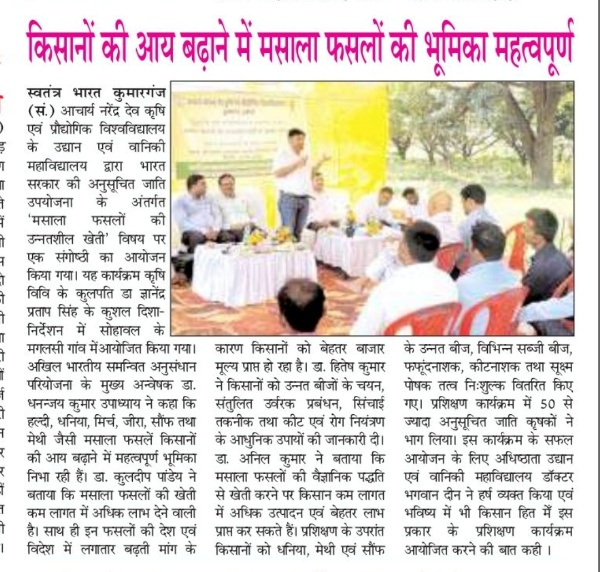
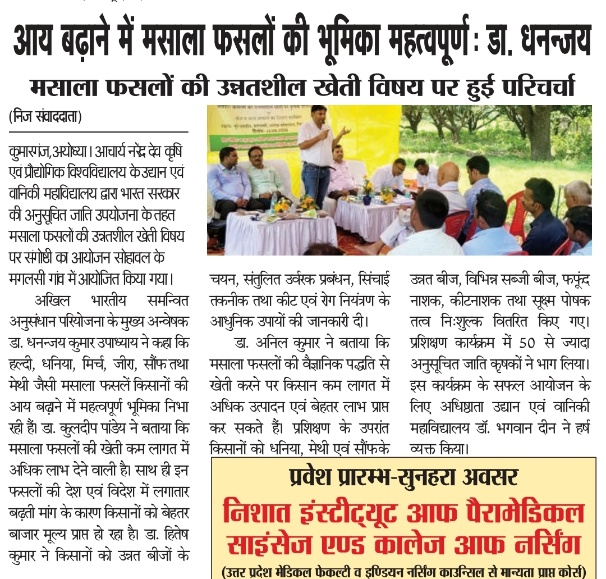
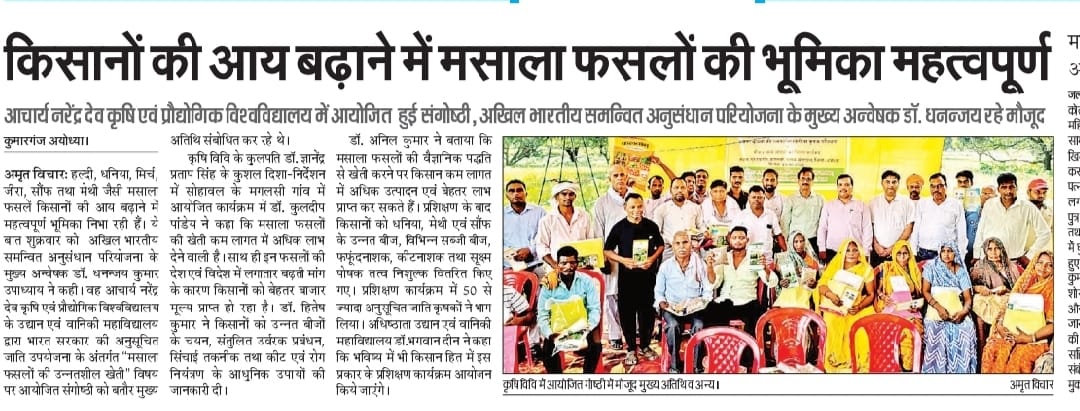
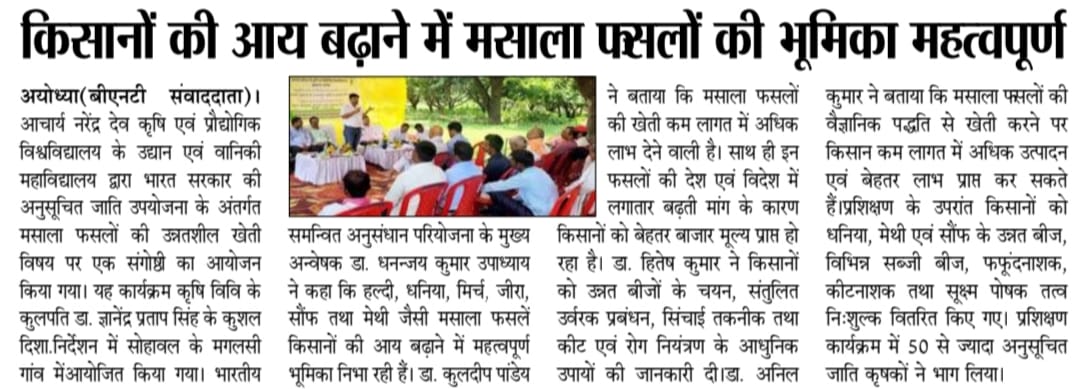
Media coverage of the training programme.