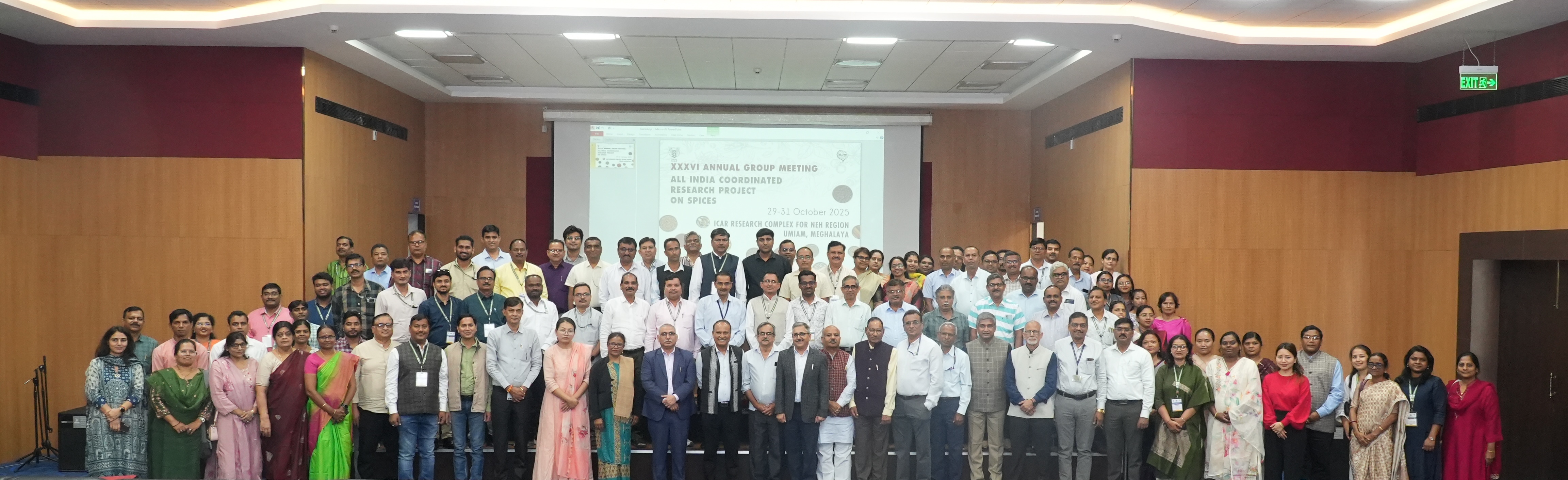
The 36th Annual Group Meeting of the ICAR – All India Coordinated Research Project on Spices (AICRPS) was held at the ICAR – Research Complex for NEH Region, Umiam, Meghalaya, during 29–31 October 2025. The event brought together leading spice researchers and scientists from across India to deliberate on innovations, challenges, and strategies for strengthening the spice sector.
The workshop was inaugurated by Dr. B. C. Deka, Vice Chancellor, Assam Agricultural University, and presided over by Dr. Sudhakar Pandey, Assistant Director General (Horticultural Sciences), ICAR.
Dr. D. Prasath, Project Coordinator, ICAR–AICRP on Spices, presented an overview of the project’s achievements during the previous year and the new initiatives undertaken under the project.
Dr. R. Dinesh, Director, ICAR–IISR; Dr. Vinay Bharadwaj, Director, ICAR–NRCSS; Dr. Samarendra Hazarika, Director, ICAR–RC NEH; Dr. Prakash Patil, Project Coordinator, AICRP on Fruits; and Dr. Augustine Gerard, Project Coordinator, AICRP on Palms also addressed the gathering.
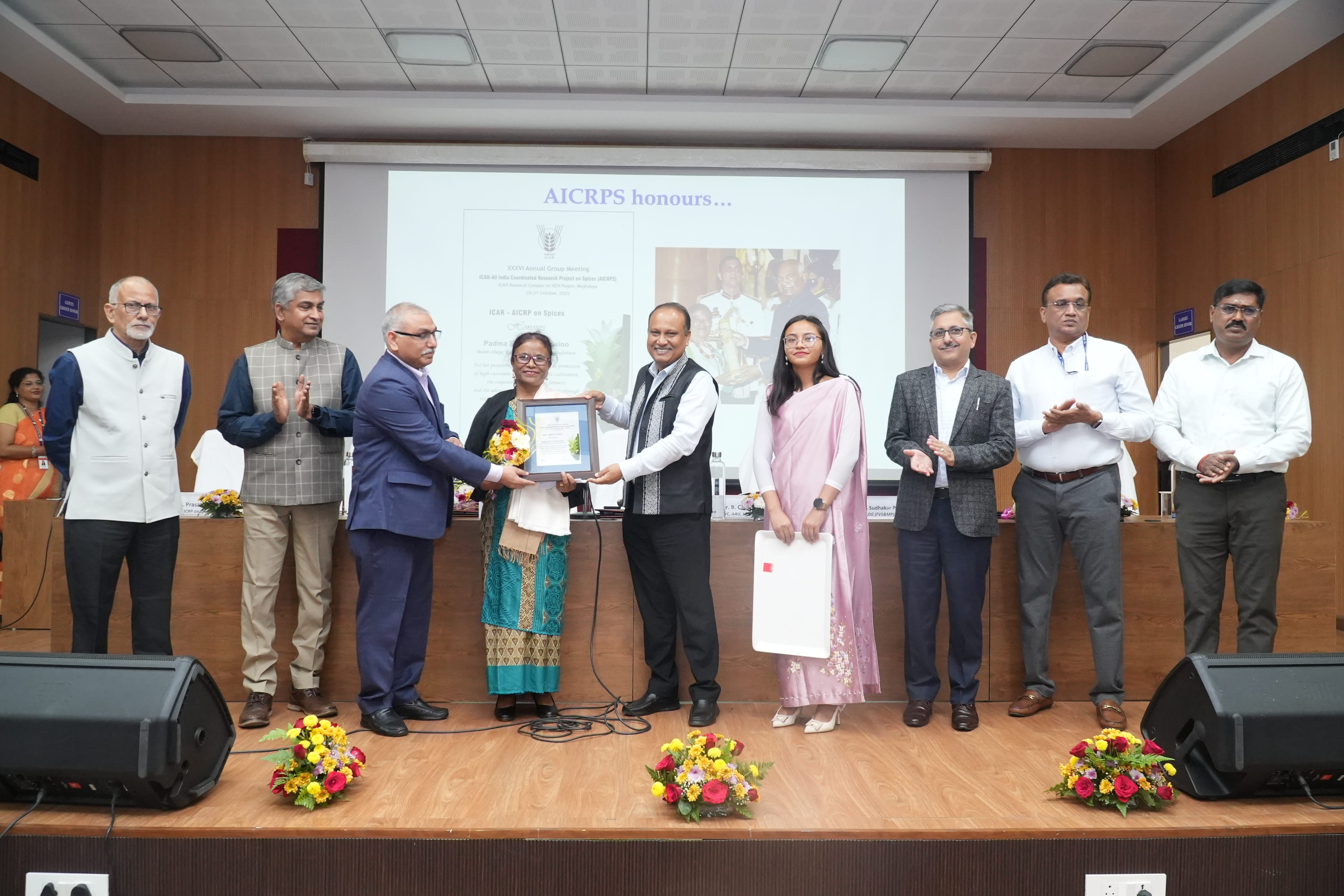
During the workshop, six new high-yielding spice varieties were recommended for release. These included three varieties of ajwain (Hisar Ajwain-7 (HAJ-7), Gujarat Ajwain-4 (JA-19-1), and Ajmer Ajwain-24), one variety of fennel (Karan Saunf-2 (RF 231)), and two varieties of ginger (Koraput Ada and IISR Navya). These varieties are expected to enhance productivity and resilience in spice farming.
The workshop also recommended seven innovative technologies for adoption by the farming community, including chemical control strategies for pollu beetle in black pepper, foliar application of growth regulators for enhancing yield in fenugreek and coriander, biocontrol methods for managing powdery mildew in fenugreek, eco-friendly management of blight disease in cumin, intercropping of field and tuber crops with ginger for higher economic returns, and the use of Bacillus subtilis for phosphorus and zinc solubilization to improve ginger yield.